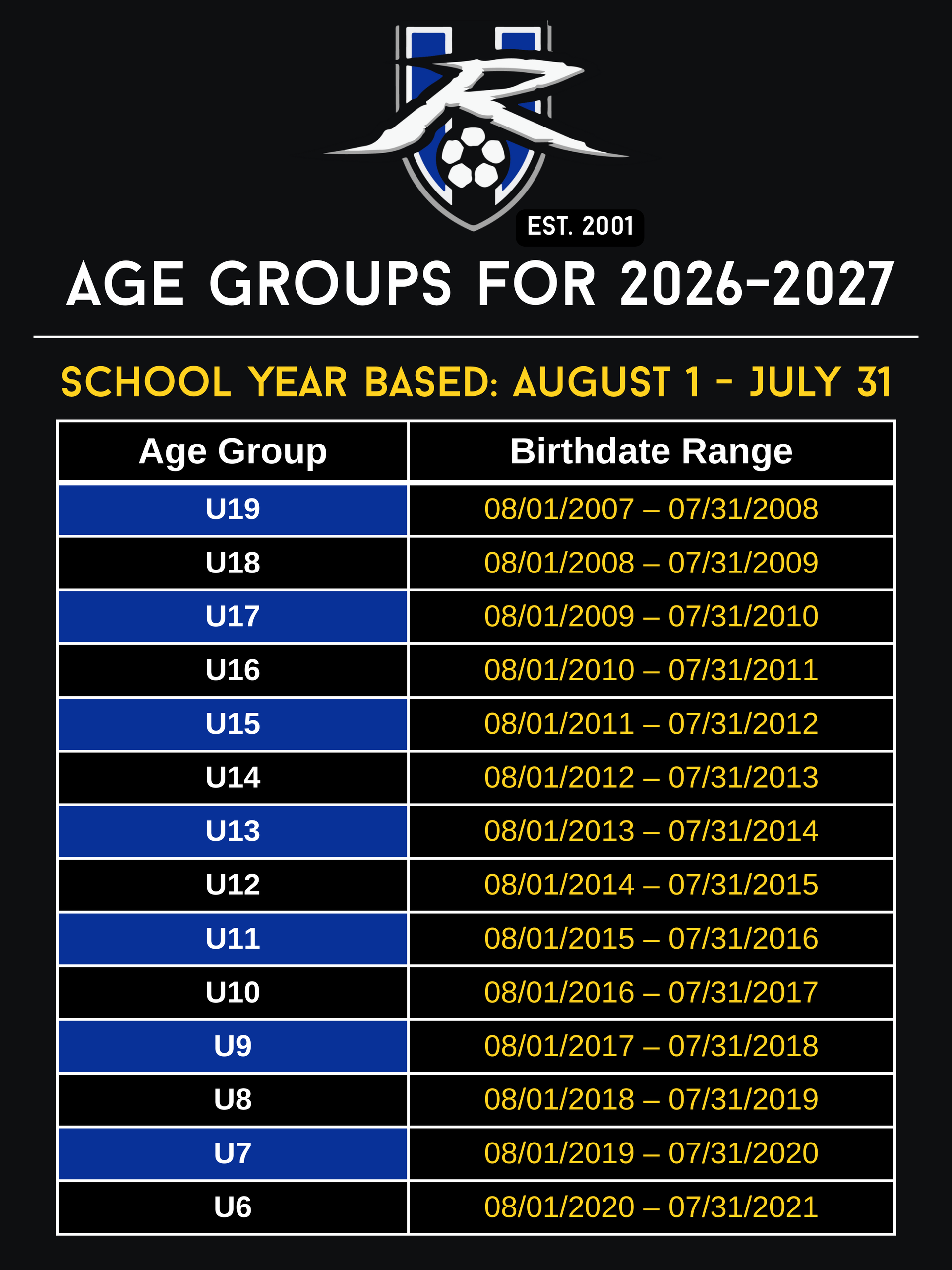
US Youth Soccer Age Change Information
What's changing?
Beginning with the 2026–27 season, US Youth Soccer (USYS) will transition from the current January 1–December 31 (“birth-year”) age group cycle to an August 1–July 31 (“school-year”) cycle. This means players will be grouped more in line with the school grade they are in, rather than strictly by calendar year. This change helps reduce confusion and aligns youth soccer with the natural flow of school and extracurricular activities.
Why the change from Birth Year to School Year age banding?
1. Aligning players with their school‑grade peers
A school‑year cutoff keeps most players grouped with classmates, which improves social fit and reduces confusion for families.
2. Reducing “trapped” players
Under the current system, many players born late in the year end up separated from their school cohort. The new system reduces these situations.
3. Enhancing player development and team chemistry
Clubs report that players progress better when grouped by school‑year maturity levels, helping cohesion and on‑field development.
4. Aligning youth soccer with most other U.S. youth sports
Leagues and national governing bodies noted that many sports already group by school year, and this move increases consistency.
Why was Aug. 1 chosen rather than Sept. 1?
Although US Youth Soccer initially planned to adopt a September 1 cutoff, extensive feedback and updated school‑year data made it clear that an August 1 cutoff offers a better alignment between player age and grade level.
This adjustment not only minimizes the “trapped player” issue but also significantly reduces the number of “force‑ups”—situations where younger soccer‑age players must compete in older age groups just to stay with their school‑year peers. The August 1 cutoff ultimately creates a more balanced, development‑friendly, and socially cohesive experience for all players. Players born after the August 1 cutoff, can always play up with their grade level friends.
How is Rampage preparing?
This shift may affect the age group in which your child plays during the 2026–27 season. Some players may find themselves moving up or down an age group as a result of the new cut-off date. We understand this can be concerning, and we are committed to making the transition as smooth and supportive as possible.
- Full player data review: We have already prepared internal player data, mapping every player to their projected age group under the new 2026–27 format. This will help us anticipate changes and communicate clearly with each family.
- Coach coordination: Beginning this winter, we will work closely with our coaching staff to plan for any adjustments needed to team structure, development pathways, and competitive balance for next season.
- Joint training opportunities: Where beneficial, players who may be affected by age group movement may have chances to participate in combined training sessions throughout the winter and spring, helping them adjust to new teammates and playing environments ahead of time.
- Parent communication: We will host an info session in early 2026 to review the transition and allow for Q&A.
What we ask of you
- Review the upcoming age group change and how it may impact your child.
- Attend the information session to receive clarity and support.
- Communicate with your coach or our admin team if your player has specific developmental or team continuity needs during the transition.
At Rampage, our mission stays the same—affordable, competitive soccer that focuses on player development, team culture, and love of the game. This age cycle change is a logistical shift, but it will not affect our commitment to your player’s growth and experience.
Age Group Calculator
Notes. The calculator follows the school‑year cycle (Aug 1 → Jul 31). This calculator is intended for informational purposes only. Final placement may vary. Please confirm your player’s official age group with your coach or our Director of Coaching.